Designers in the School Community visit Year 12 Visual Communication Design
In an engaging and insightful start to the year, our Year 12 Visual Communication and Design students were treated to a unique educational opportunity. We welcomed two design professionals and members of the Tintern community into the classroom to share a glimpse into the diverse world of design careers, bridging the gap between theoretical knowledge and practical application.
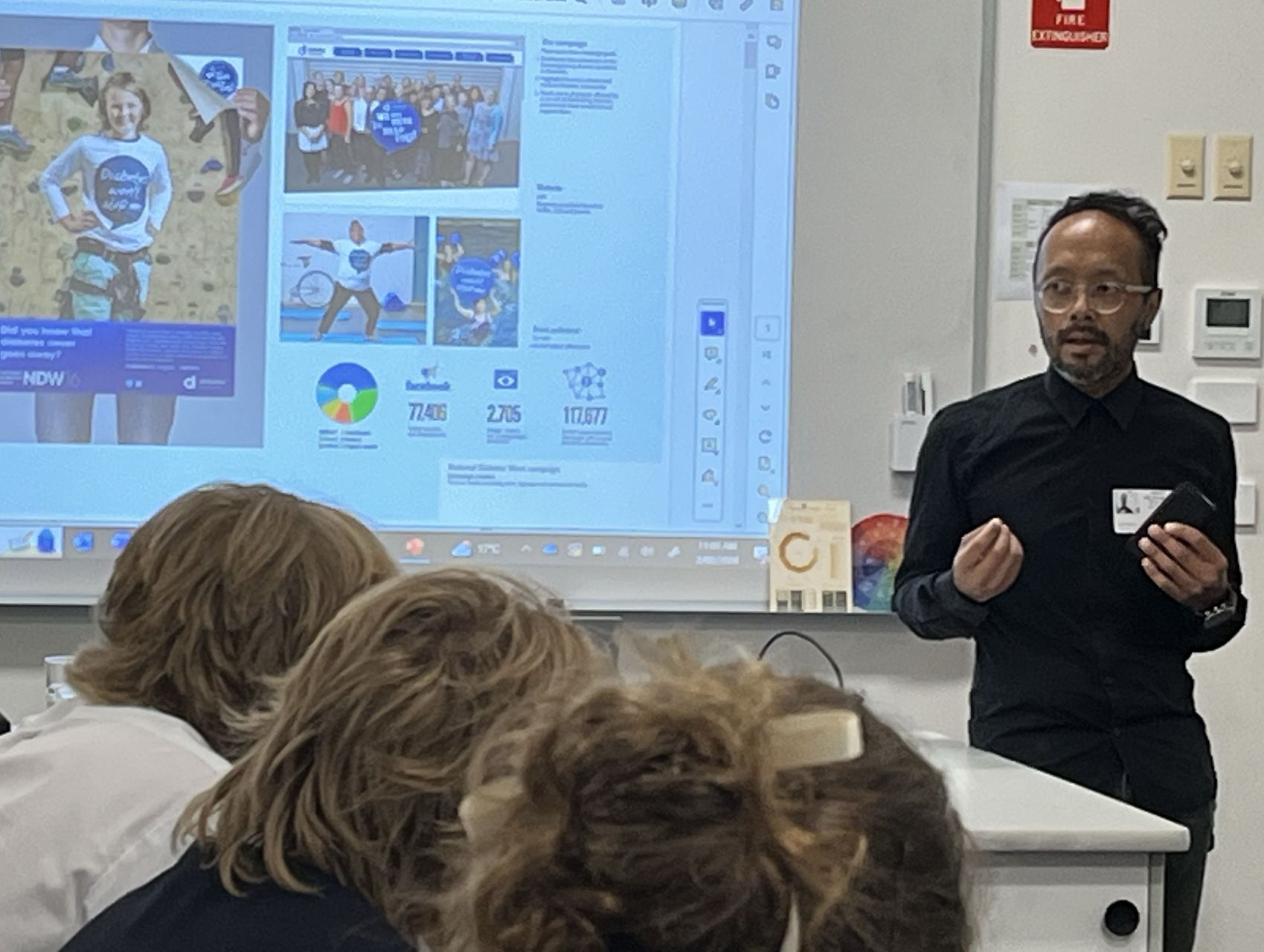
Nino Soeradinata, Graphic Designer and Video Producer is currently working for Diabetes Victoria. His impressive folio of past projects for a diverse range of clients including Rip Curl, Melbourne Zoo and Victoria Tourism, provided students with an appreciation of the scope of possibilities a career in graphic design has to offer. His unconventional design journey, passion and thoughtful approach spoke to the value of curiosity, versatility, and adaptability in the design industry. Students were introduced to the nuances of graphic design in a healthcare context, where a human-centred approach is vital to communicate effectively and sensitively to your audience.
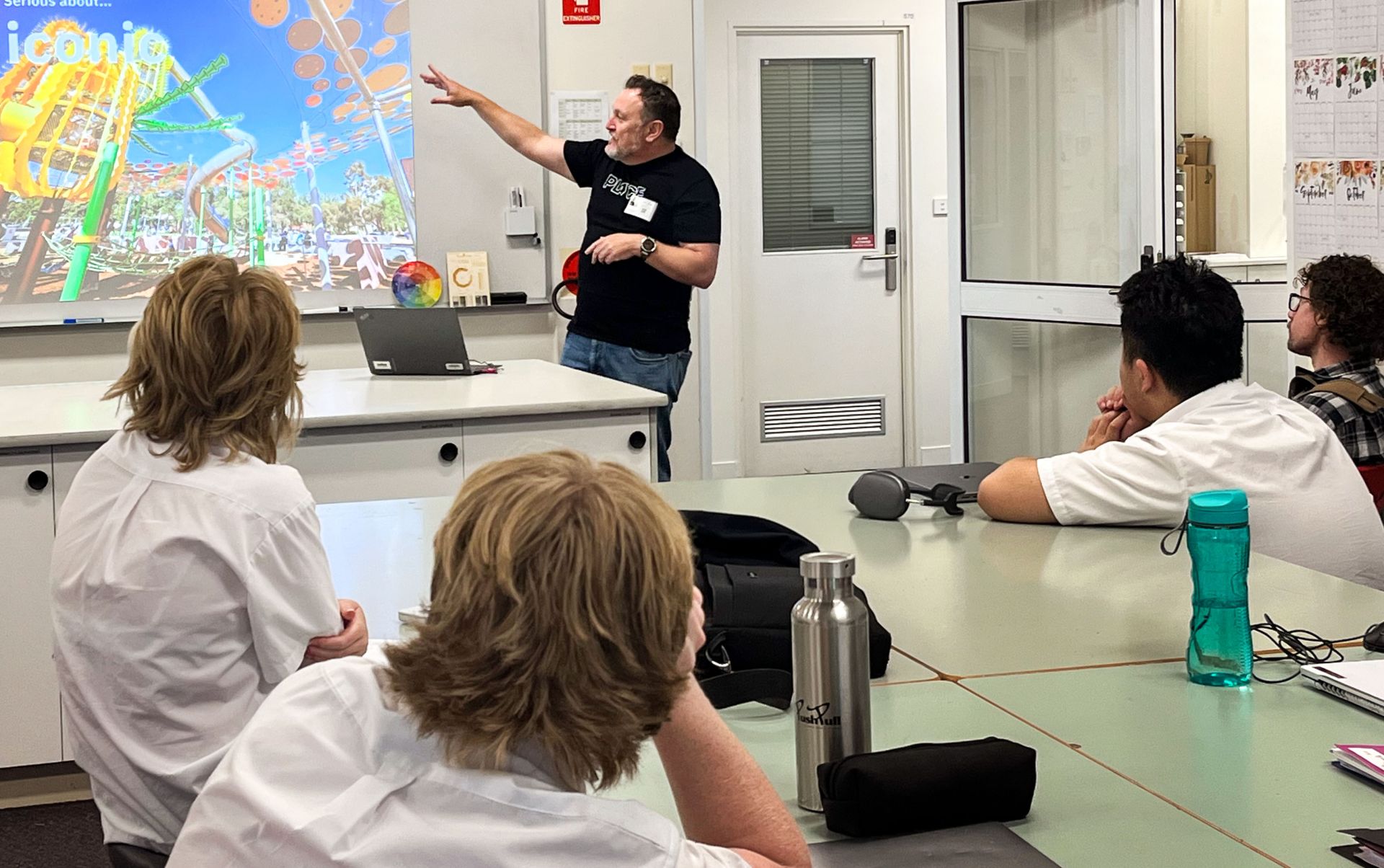
Aaron Wallis, Landscape Architect, and parent at the School, specialises in the design of spaces for play and fun. His team at the award winning and innovative company ‘Playce’ specialise in the design of skateparks, and bespoke play spaces. Students were presented with a deep dive into the design process of the exciting creation of an 8-million-dollar community project for the City of Bunbury in W.A. From site analysis and community consultations to the final construction stages, we watched an arid waterside space transform into a vibrant multipurpose playground. Aaron’s expertise not only inspired the students but also illustrated the power of good design to facilitate community engagement and well-being.
These presentations led to discussions about the integration and future of technology in design. Aaron highlighted the practical applications of Virtual Reality in the design of environments. He shared how VR technology allows designers to visualise and experience spaces before they are physically constructed, enhancing accuracy and client engagement. When reflecting on the impact of AI in this field Nino emphasised that despite the rapid advancements, the essence of design remains inherently human and that creativity, empathy, and human insight are irreplaceable, ensuring that at its core, design will always necessitate a human touch. It was a reminder of the broader educational value of design, and how teaching students to think creatively and become adept problem-solver prepares them to navigate and shape the future in a world and job market that is characterised by constant evolution.
These presentations offered more than a peek into the design processes; they facilitated a dialogue with professionals, encouraging queries about career paths, essential skills, and the practical aspects of working in the design field. We were very grateful to Nino and Aaron for giving up their time to provide real-world experiences, inspiring future endeavours in the world of design for our students.
Emma Hughes | Visual Communication Design and Technology Teacher