The power of construction play in early childhood
Construction play is far more than just stacking blocks or building towers—it’s a powerful tool for learning, exploration, and development. By offering children opportunities to build, create, and collaborate, we nurture essential skills that form the foundation for lifelong learning.
In cultivating a Culture of Thinking, we value environments where children’s ideas are respected, their questions are encouraged, and their learning is made visible. As Ron Ritchhart reminds us, ‘Learning is a consequence of thinking. And thinking is something we want all students to do.’ (1) Through construction play, we see children’s thinking unfold in tangible, meaningful ways.
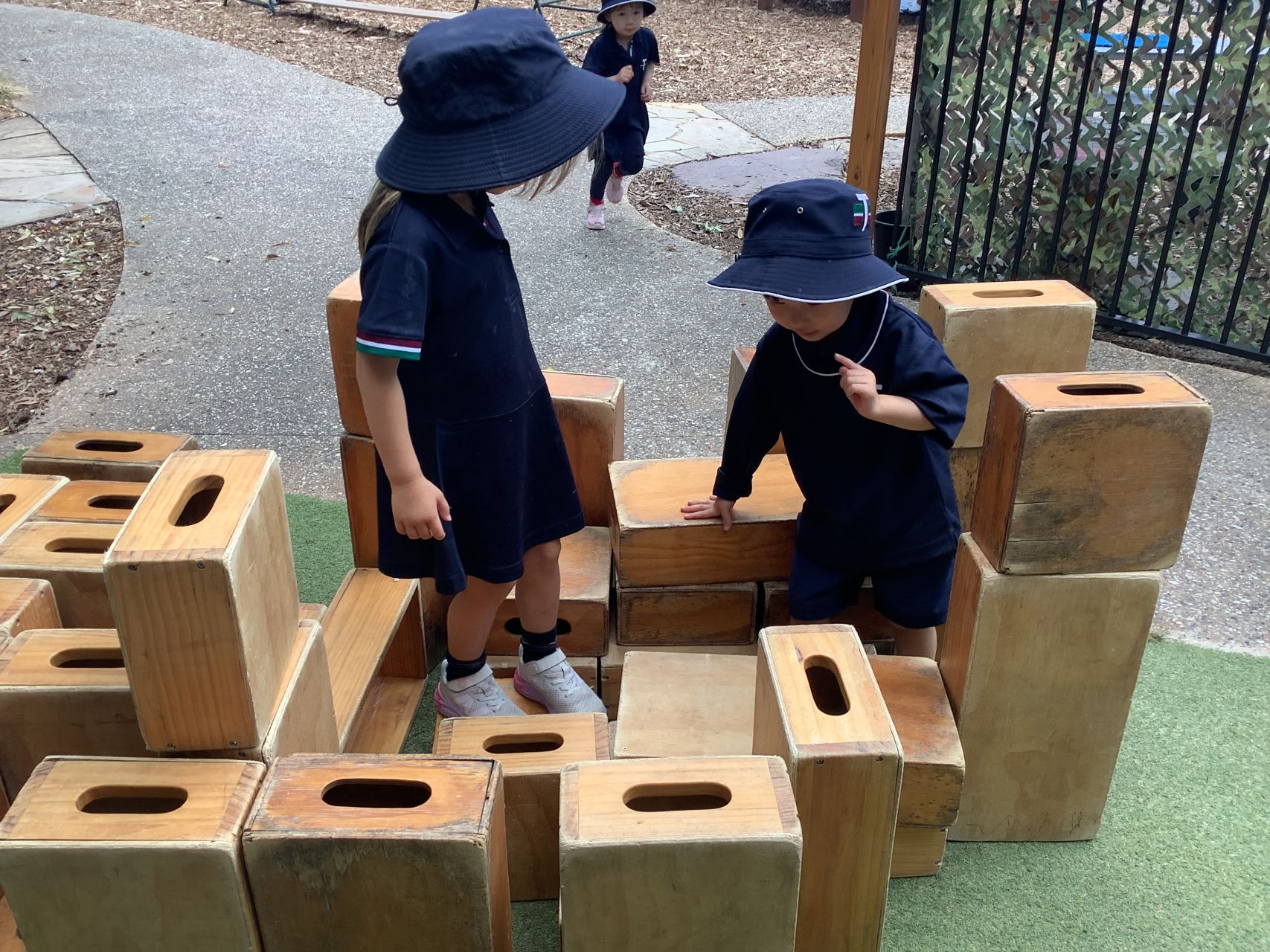
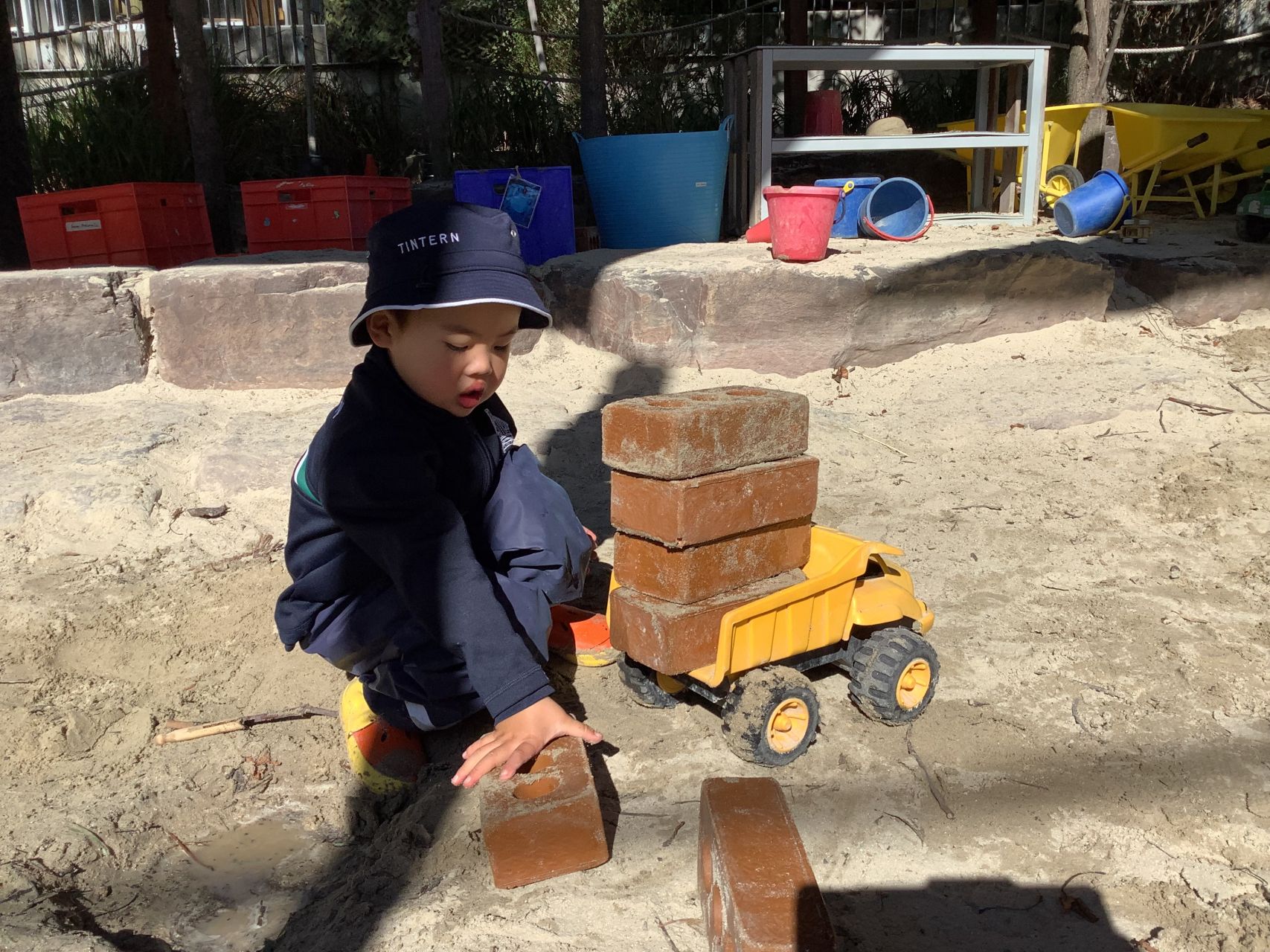
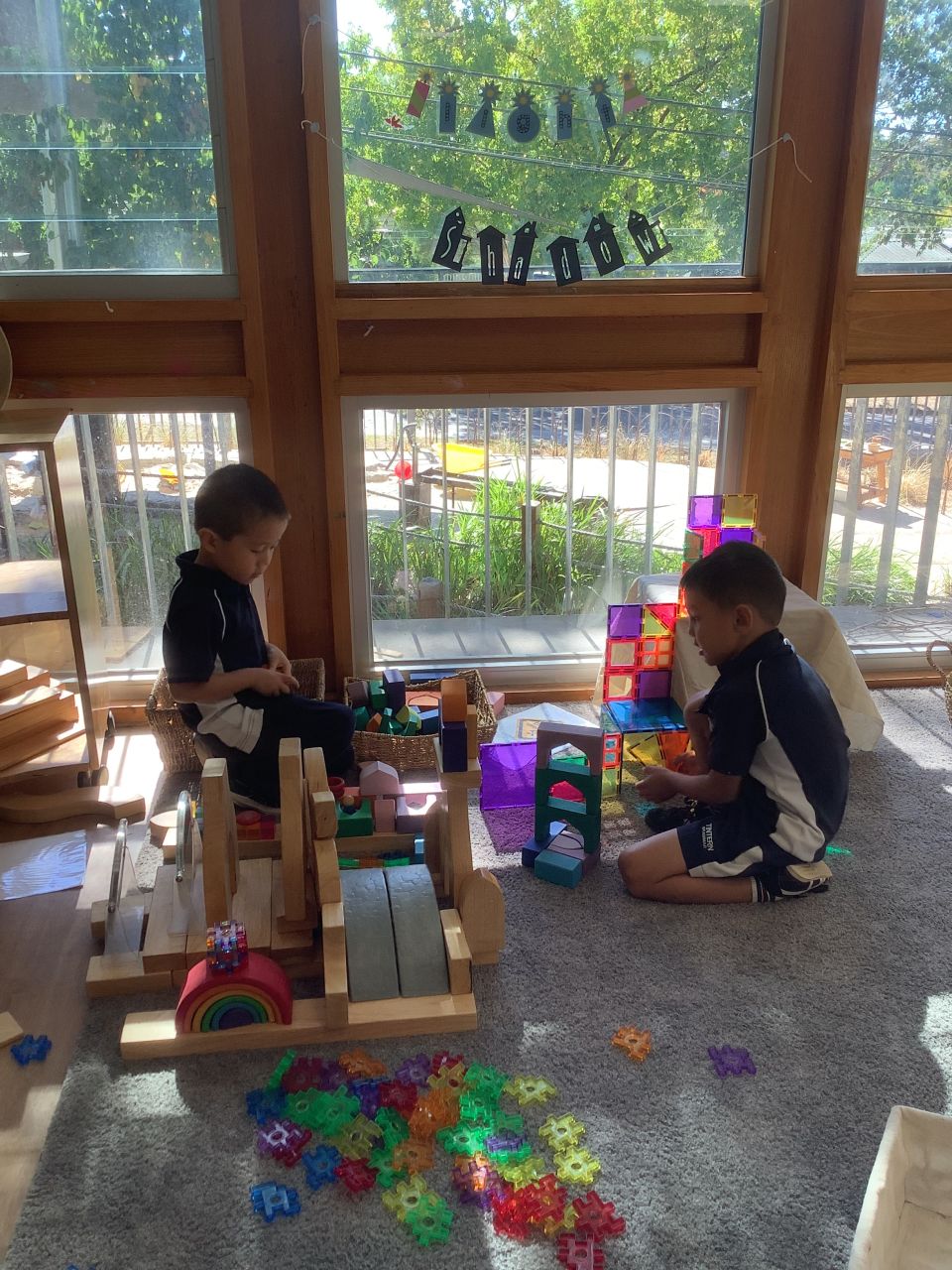
Children benefit greatly from access to construction experience. These activities allow children to make their own choices, engage in collaborative play, develop negotiation skills, and strengthen both fine and gross motor skills. They learn to plan, design, and build with 3D materials.
Block construction, in particular, encourages symbolisation and representation. It supports cognitive development by allowing children to make comparisons, classify, explore directionality and sequencing, and practice divergent thinking and logical reasoning. Construction play also introduces mathematical concepts such as size, shape, space, and weight, while nurturing creativity and imagination.
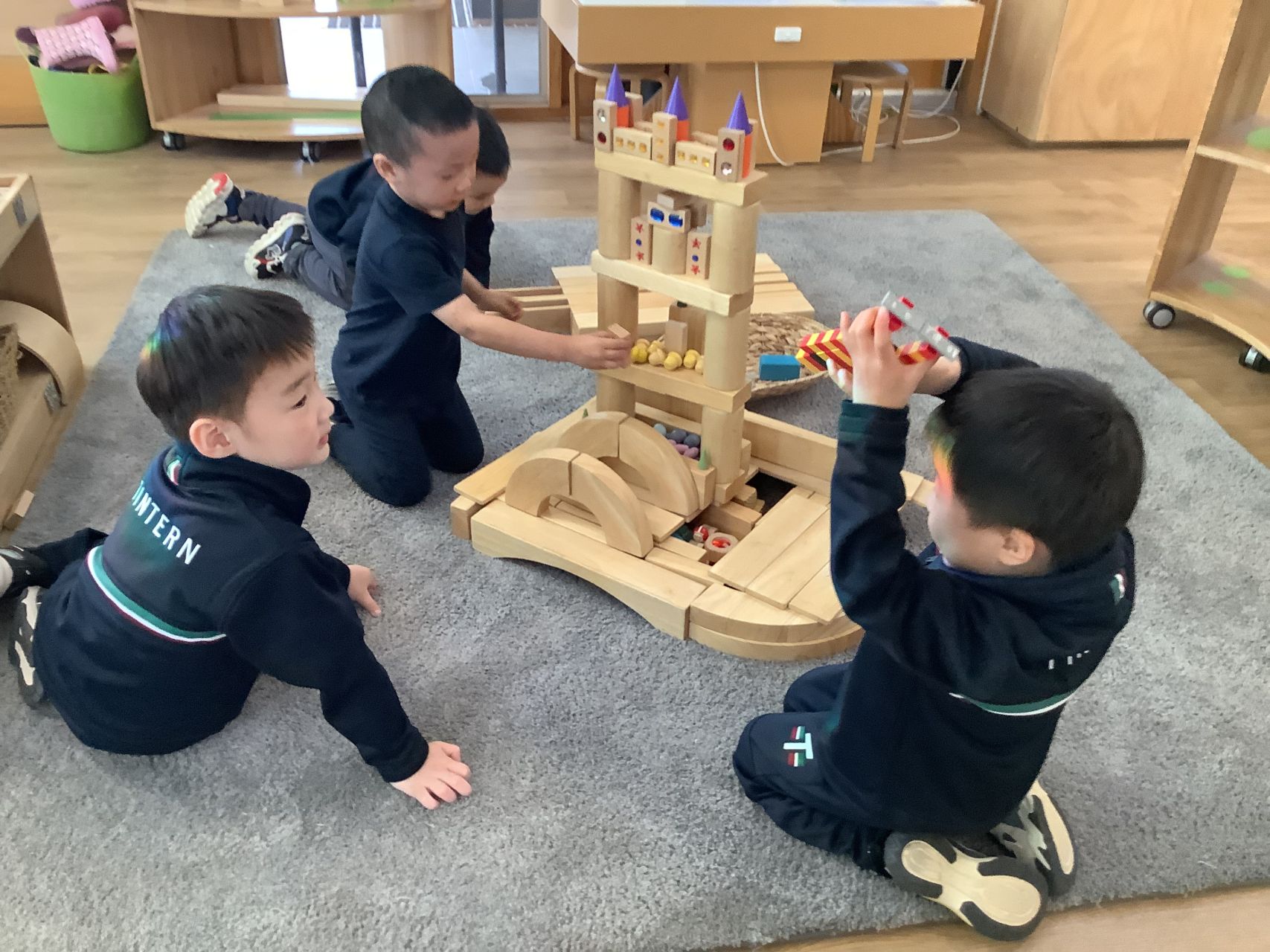
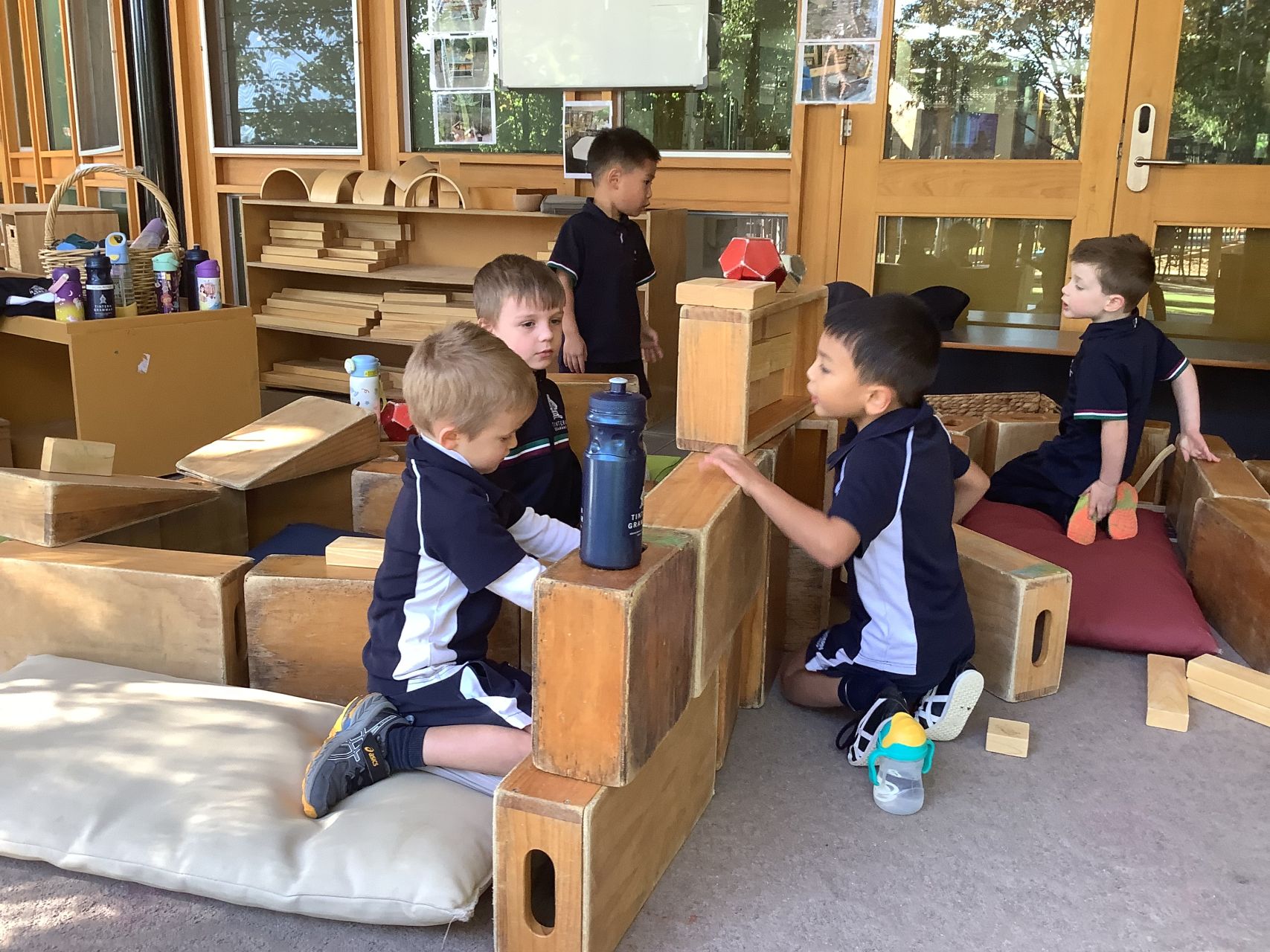
During construction, children’s thinking becomes highly visible—they build, reflect, dismantle, and rebuild. These moments foster cooperation, turn-taking, and sharing, while also encouraging respect for others’ ideas.
Providing opportunities for children to plan their work, articulate their process (what worked and what did not), and enjoy the cycle of creation and deconstruction is essential.
A well-resourced construction area becomes a vibrant hub of language, social interaction, cooperation, and problem-solving, inspiring children to work together toward a shared goal.
‘Children learn through play. When children play with others, they create social groups, test out ideas, challenge each other’s thinking and build new understandings.’— Victorian Early Years Learning and Development Framework (VEYLDF)
Kristin De Vos
Head of Early Learning Centre
- (Ritchhart, R. (2015). Creating Cultures of Thinking: The 8 Forces We Must Master to Truly Transform Our Schools. Jossey-Bass).